
Find your VIN
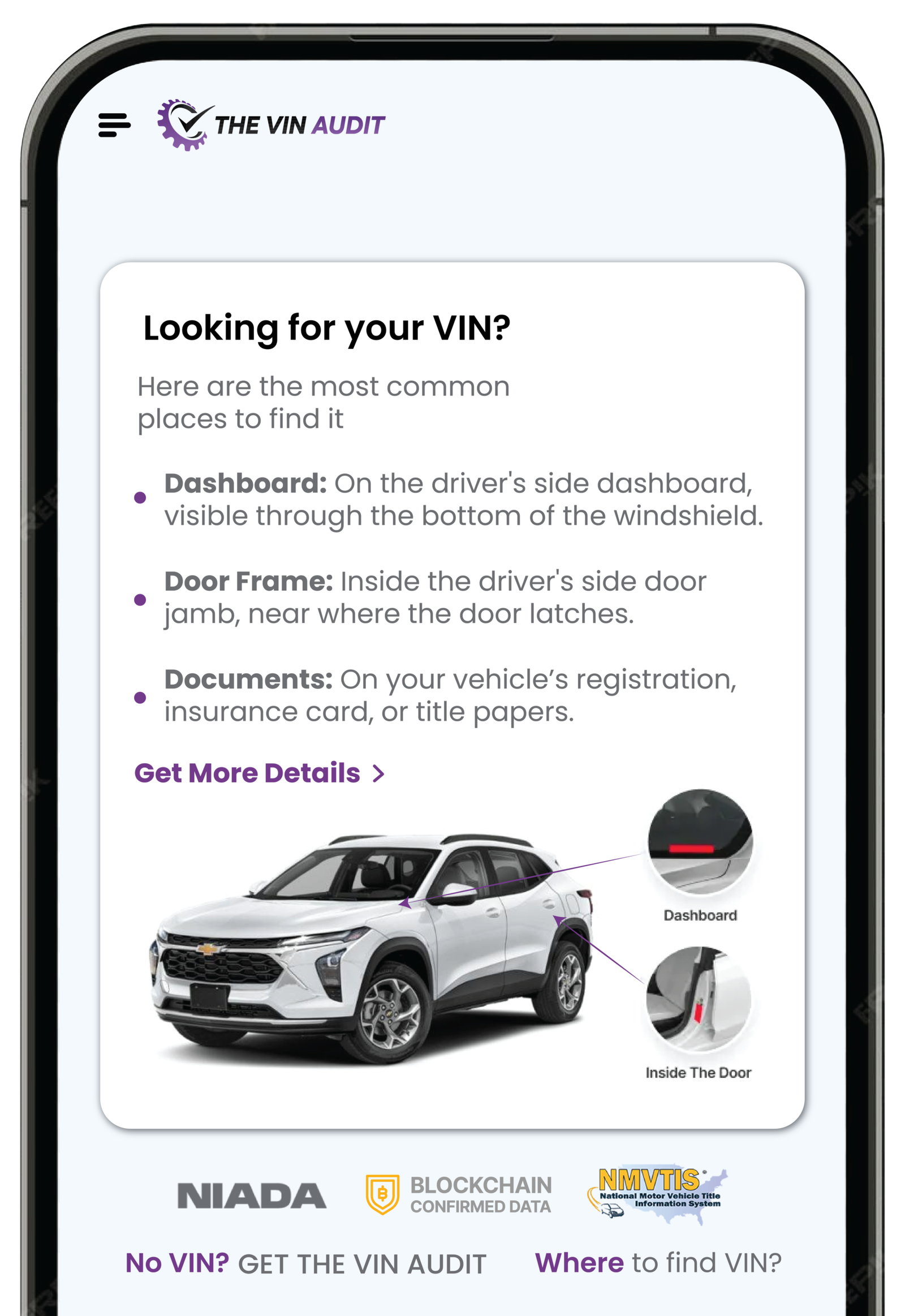
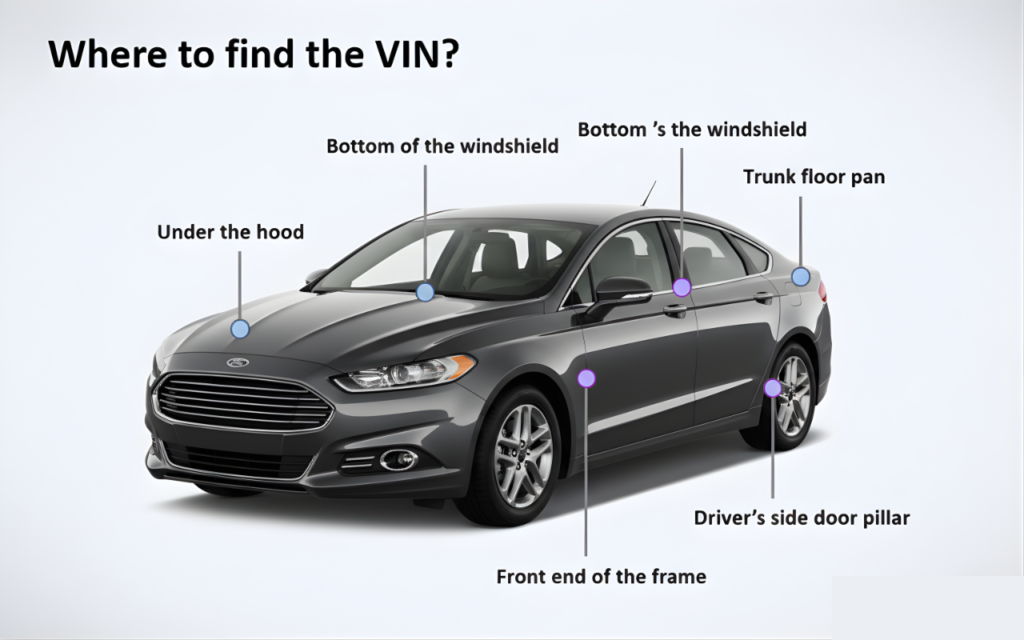
Easily locate the 17-character Vehicle Identification Number on your car or official documents.
Enter the Sequence
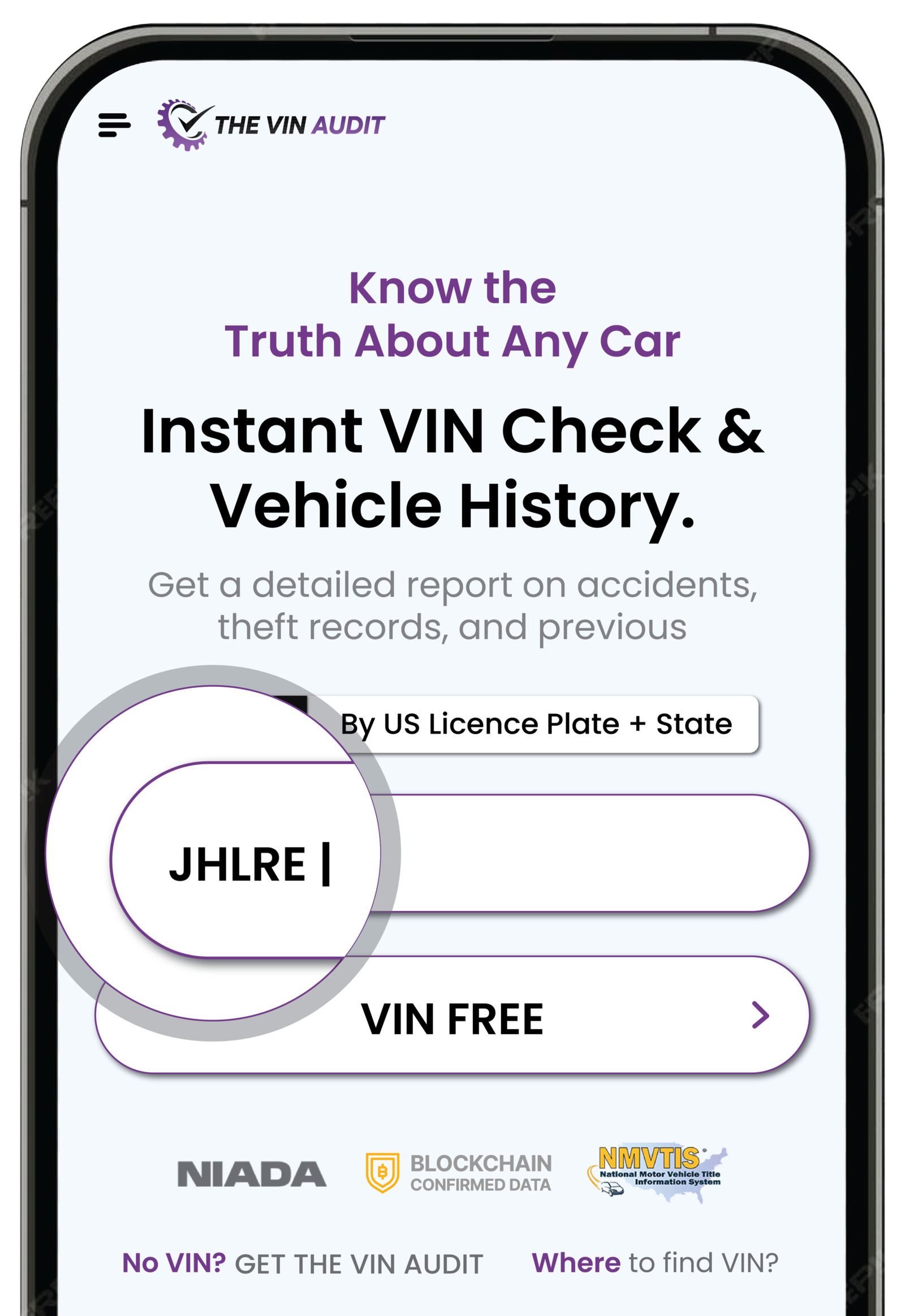
Input your VIN into THE VIN AUDIT decoder to start uncovering the full vehicle history.
Click "Decode VIN"
Hit the button and let THE VIN AUDIT analyze your VIN instantly.
Get results
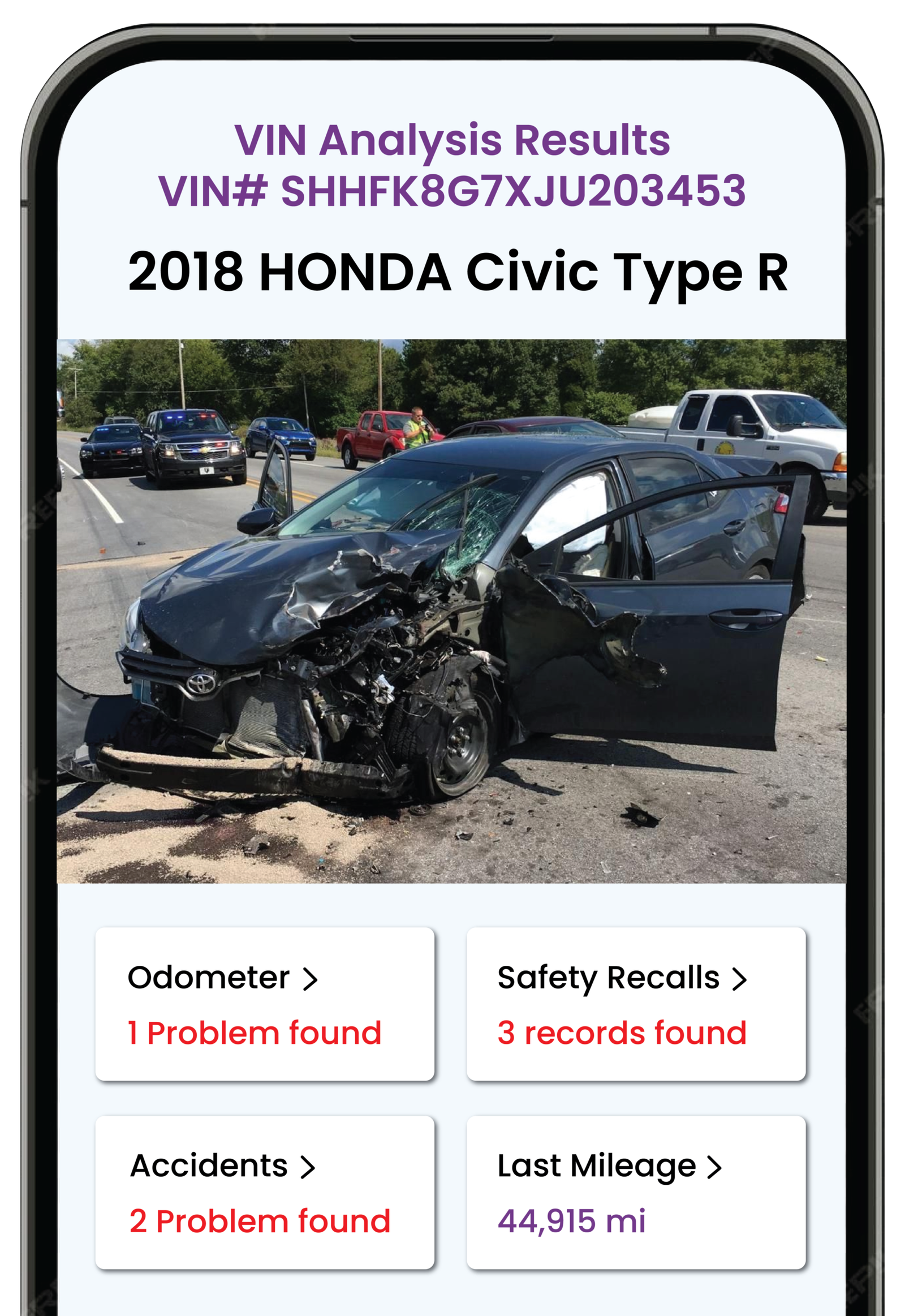
Access a complete report on your car, including accidents, ownership history, and recalls.

VIN Decoder – Understand Your Vehicle’s Identity
Use our VIN Decode service to break down your vehicle’s VIN and see what each section means. This is ideal when you want to confirm the exact model, engine, and specifications.
What Is VIN Decoding?
VIN decoding is the process of translating a vehicle’s 17‑digit identification number into meaningful data points. Each character or group of characters reveals information about the manufacturer, country of origin, model line, engine, safety systems, and more.
Information You Get from VIN Decode
- Country and region of manufacture. li>
- Manufacturer and division.
- Model line and body style.
- Serial / production sequence number.
Why VIN Decoding Matters
- Verification: Confirm that the vehicle’s physical features match its paperwork and advertisements.
- Compatibility: Ensure parts, accessories, and upgrades are compatible with the exact model and engine.
- Valuation: More accurately estimate market value based on precise specifications.
- Fraud detection: Identify mismatches that may suggest cloning or tampered identification.
VIN Explained: A Digit-by-Digit Breakdown
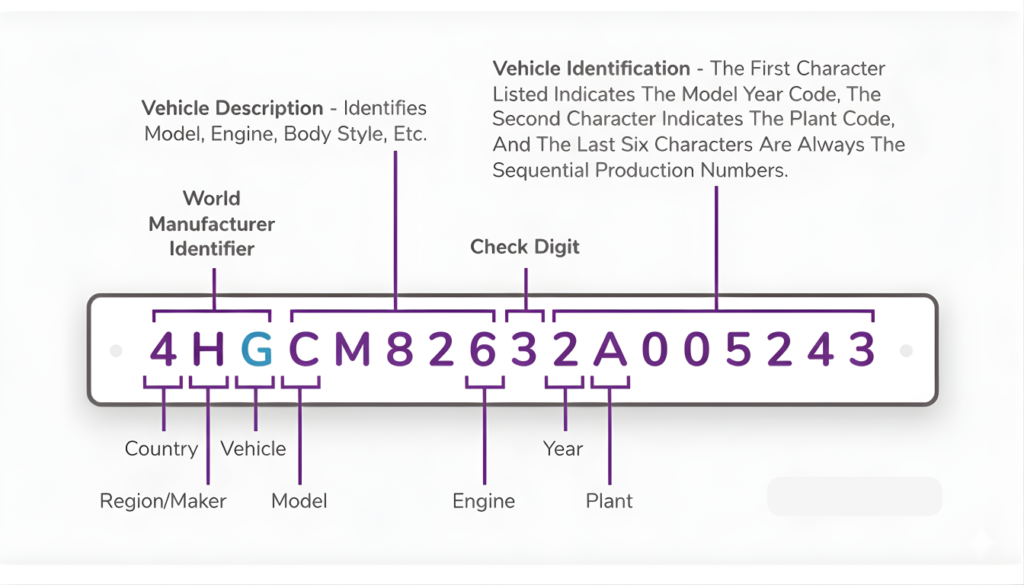
Every character in a Vehicle Identification Number (VIN) carries specific information about a vehicle’s manufacturer, build details, and identity. Understanding how each digit is structured helps decode the vehicle’s origin, specifications, and key identifiers with accuracy.
Below, you’ll find a clear breakdown of the VIN format, along with a visual diagram and complete reference tables covering World Manufacturer Identifiers (WMI) and Vehicle Identifier Sections (VIS) for easy interpretation.
Frequently Asked Questions
A VIN is divided into three main sections:
- WMI (World Manufacturer Identifier): Identifies the country and manufacturer
- VDS (Vehicle Descriptor Section): Describes model, body type, engine, and safety systems
- VIS (Vehicle Identifier Section): Includes model year, plant code, and serial number
Table Idea:
VIN Section | Position | Description |
WMI | 1–3 | Manufacturer & country |
VDS | 4–8 | Vehicle attributes |
Check Digit | 9 | VIN validation |
VIS | 10–17 | Year, plant & serial |
VIN decoding matches factory-issued specifications with the vehicle’s actual configuration. Any mismatch in engine type, body style, or production year may indicate tampering, cloning, or misrepresentation.
Check Area | What It Confirms |
Engine code | Correct engine type |
Body style | Factory design |
Model year | Production year |
Plant code | Assembly location |
The VDS (digits 4–8) defines the vehicle’s technical details, including model, trim, engine, drivetrain, and safety features.
Digit | Information Type |
4–5 | Model & body style |
6 | Engine type |
7 | Safety systems |
8 | Trim/variant |
The check digit (9th position) is calculated using a standardized formula. It confirms whether a VIN is mathematically valid and helps detect incorrect or fraudulent VINs.
Position | Purpose |
9 | VIN authenticity check |
Result | Valid or Invalid VIN |
The VIS (digits 10–17) identifies the model year, manufacturing plant, and the vehicle’s unique serial number.
VIN Digit | Meaning |
10 | Model year |
11 | Assembly plant |
12–17 | Serial number |