
5 Essential Checks Before Buying a Used Car with a VIN Report
Buying a used car saves thousands compared to new models, but hidden issues like accidents, odometer fraud, or salvage titles can turn savings into massive repair bills. A detailed VIN-based vehicle history report from THE VIN AUDIT uncovers these risks instantly, guiding smarter decisions before you sign.
Why VIN Reports Protect Your Investment
Vehicle history reports aggregate data from DMVs, insurers, auctions, and police records, revealing what sellers hide. Skip this step, and you risk buying flood-damaged lemons or tampered odometers. Pair it with a pre-purchase inspection (PPI) for total coverage.
Check 1: Title Status
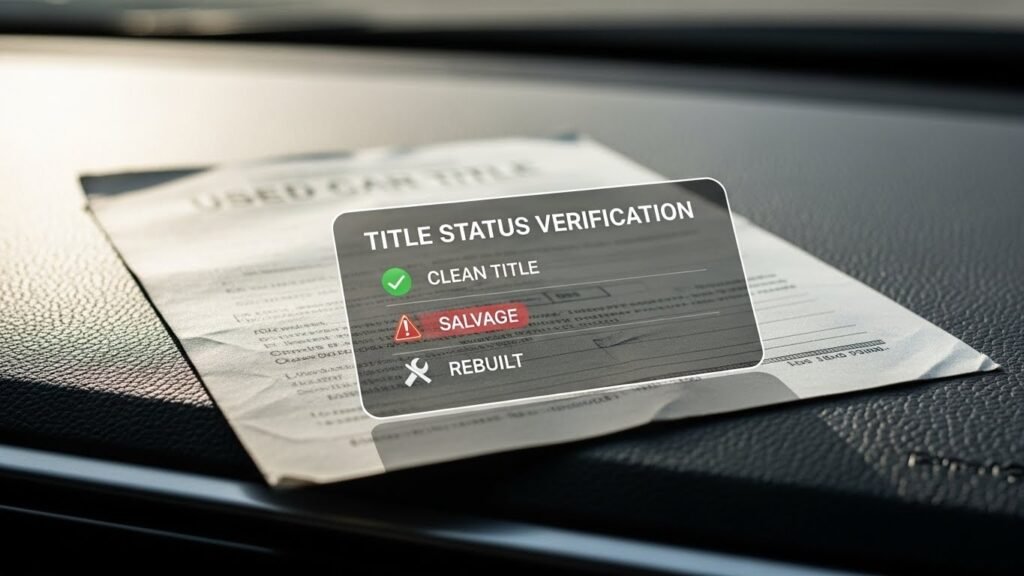
Scrutinize the title first, it’s the foundation of vehicle legitimacy. Branded titles signal past trauma that impacts safety and value.
Title Type | Indicates | Risk Level | Resale Impact |
Clean | No major damage reported | Low | Full value |
Salvage | Totaled by insurance | High | 20-40% loss |
Rebuilt | Repaired after salvage | Medium | 15-30% loss |
Flood | Water damage (often hidden) | Very High | 30-60% loss |
Lemon Law | Repeated defects | High | 25-50% loss |
Action Step: Reject salvage/flood outright unless you’re a rebuilder. Even a rebuilt needs frame verification.
Check 2: Accident History
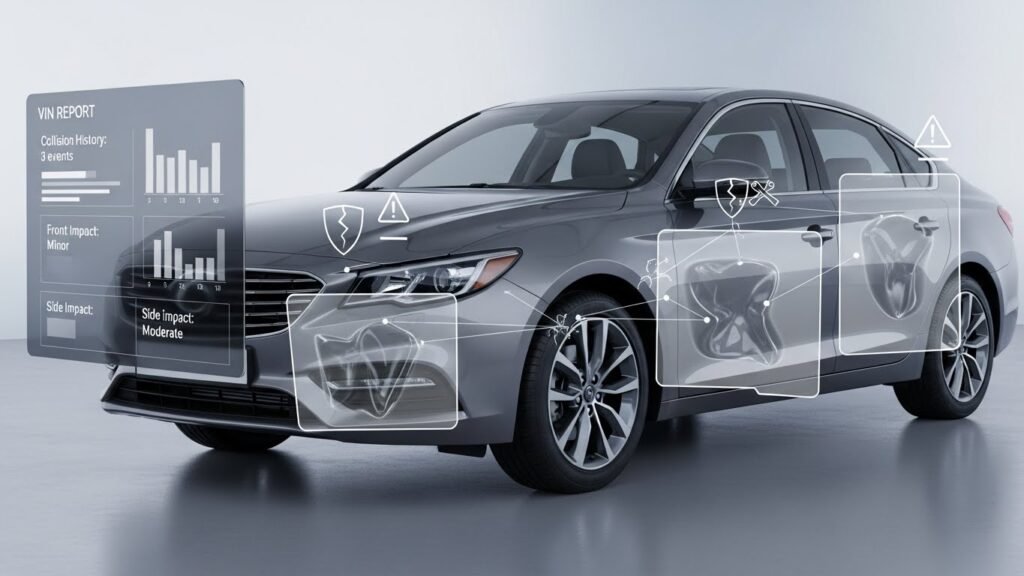
Accident logs detail dates, severity, and damage zones from insurance claims. Structural crashes (front/rear) weaken frames; airbag pops signal violence.
Accident Severity | Typical Damage Areas | Safety Concern | Walk-Away Threshold |
Minor | Cosmetic (bumper, paint) | Low | 1-2 minor OK |
Moderate | Fenders, doors | Medium (alignment) | 2+ incidents |
Severe | Frame, airbags deployed | High (crash structure) | Any frame hit |
Pro Tip: Cross-reference with photos—paint mismatches hide repairs. Schedule PPI for any reported impacts.
Check 3: Odometer & Mileage Readings
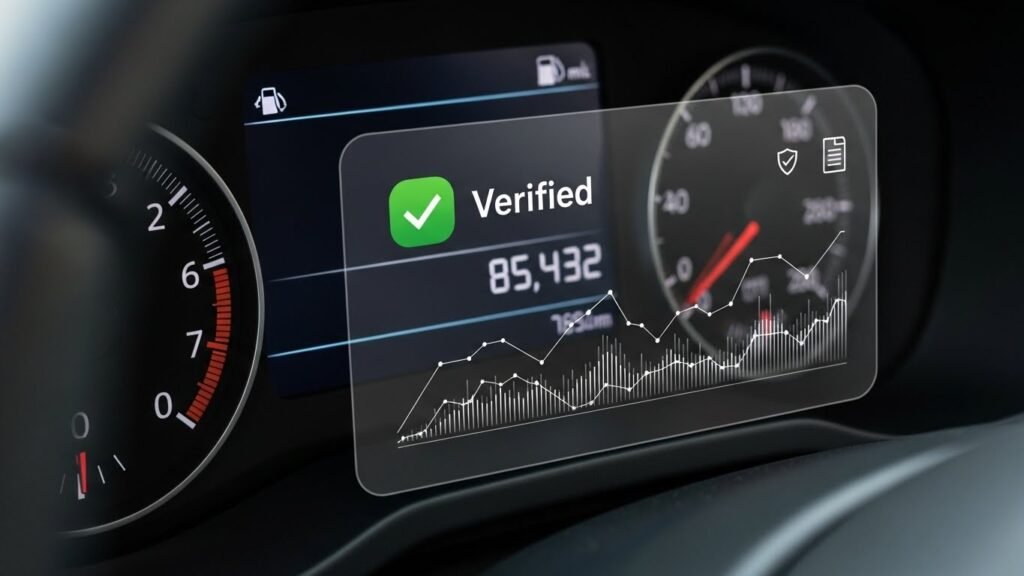
Odometer fraud costs buyers $1B+ yearly. Track mileage progression across ownerships; sudden drops scream tampering.
Red Flag Pattern | Likely Issue | Verification Steps |
Mileage decreases | Rollback detected | Compare DMV vs. service logs |
Huge jumps (50k+ in a month) | Speedometer swap | Check service intervals |
Inconsistent across reports | Multiple tampering attempts | PPI compression test engine |
Benchmark: 12-15k miles/year is normal. High-mileage with records often beats low-mileage neglect.
Check 4: Ownership & Use History
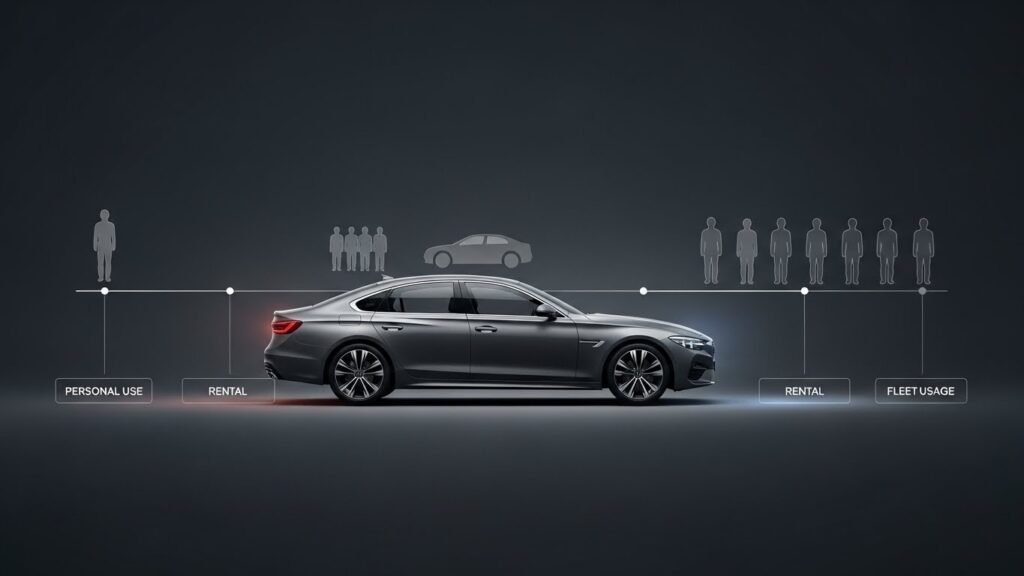
Frequent flips or fleet use accelerate wear. Personal owners maintain better.
Owner Pattern | Avg Ownership Length | Wear Risk | Ideal For Buyers? |
1-2 Long-Term | 3+ years | Low | Yes |
5+ Short-Term | <1 year | High | Caution |
Rental/Taxi/Fleet | Varies | Very High | Avoid |
Insight: Ex-Uber/taxi frames crack faster. Long single-owner + records = goldmine.
Check 5: Recalls & Service Records

Unfixed recalls kill check NHTSA open issues. Gaps in oil changes predict failures.
Service Indicator | Green Flags | Red Flags |
Recalls | All completed | Open safety defects |
Oil Changes | Every 5k miles | Gaps >10k miles |
Major Services | Timing belt, transmission | Never serviced at dealers |
Tire/Brake Records | Recent replacements | Original at 80k+ miles |
Download the NHTSA app for instant recall scans by VIN.
VIN Report + PPI Comparison Table
Aspect | VIN Report Alone | VIN Report + PPI |
Cost | $20-40 | $170-440 total |
Coverage | History/ownership | History + current condition |
Fraud Detection | Odometer, title brands | Leaks, wear, frame straightness |
Decision Power | Negotiate 10-20% | Walk away or demand fixes |
Frequently Asked Questions
A VIN is a unique 17-character code assigned to every vehicle for identification.
Our data is sourced from trusted automotive and official databases for high accuracy.
Yes, reported accidents, damage severity, and repairs are included.
Absolutely. All transactions are encrypted and secure.